
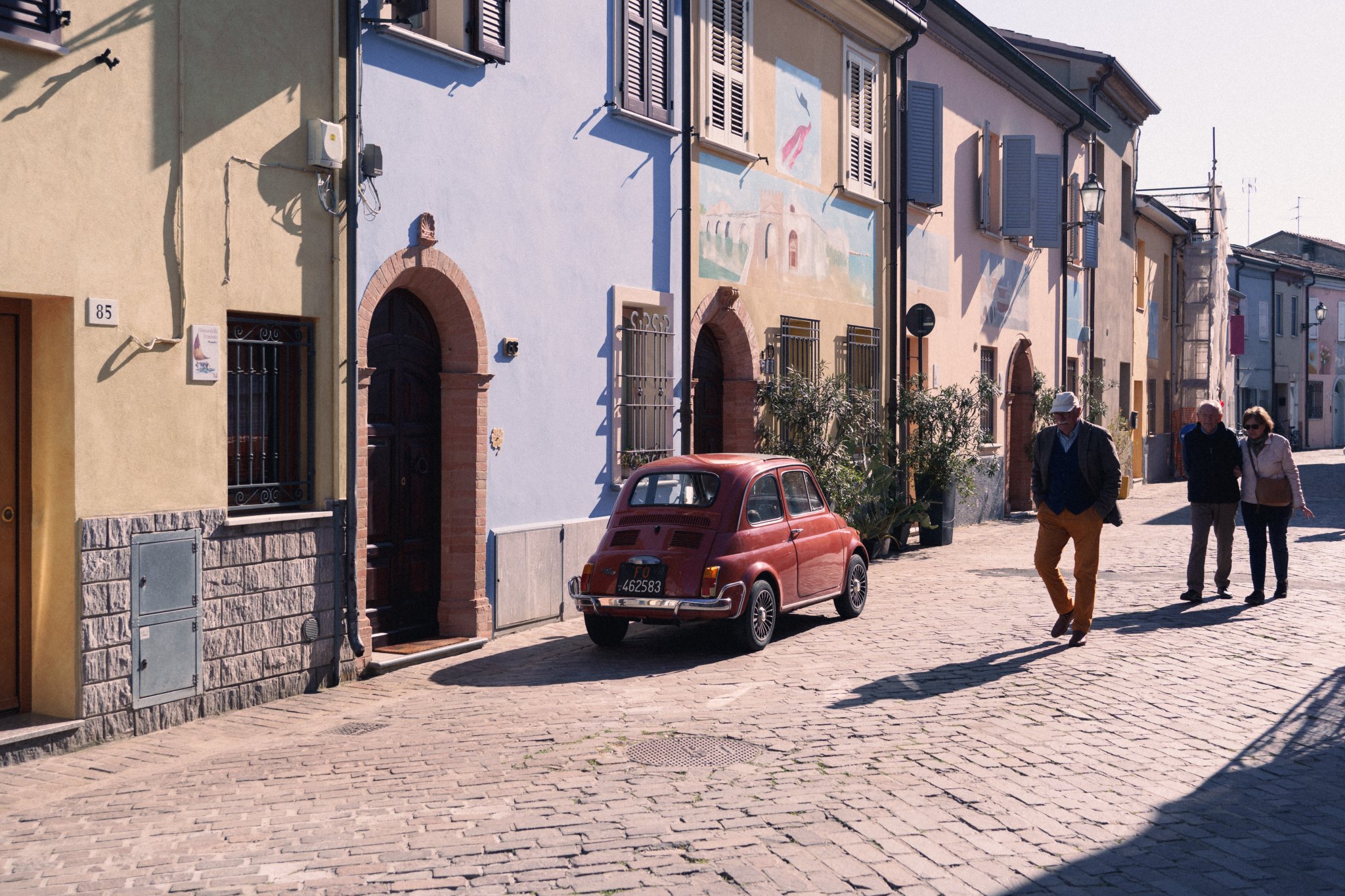
Not being a journalist or documentary photographer, I have a luxury: I get to choose what to show and what to hide – crop out, clone out, delete, or simply never point the lens there in the first place. I answer to no ethics but my own. (Terrifying, I know.)
But that wasn’t always true. There was a time before I’d worked out what I could, should, or absolutely-should-not shoot while roaming around with a camera.
So I’ve been mulling over the minimum set of rules I now apply, silently, to pretty much every shot. I never photograph – and certainly never publish – photos of:
- People in distress (homeless, crying, arguing, elderly people struggling, etc.)
- People simply because they’re beautiful or ugly
- Anyone who could be portrayed badly or misunderstood
- People in the act of eating or drinking – nobody looks dignified mid-bite, and nobody deserves to be immortalized with a forkful of spaghetti halfway to their mouth
- Children and kids.
A sixth rule is more of a gut check – a fancy rationalization of “don’t be a jerk.” When a shot gives me a bad feeling, I ask myself: is this just shyness, or am I about to invade someone’s privacy? Usually it’s shyness, and I take a breath and go for the shot (maybe). Sometimes it’s not, and I let it go.
A seventh: read the room – or rather, the culture. Tolerance for street photography swings wildly by country, city, even by which side of the piazza you’re standing on. I try to stay tuned in.
All this might sound like a blurry line. Maybe it is – though it shouldn’t be, not for any of us who like to call ourselves responsible street photographers. Photographing strangers is tricky enough on its own; add all this and it starts to feel like a minefield, camera slung round your neck. I’m not saying anyone should adopt my exact rules. Just that we should all work out our own, with a bit of empathy and understanding – the same ingredients that make us decent humans generally, though let’s keep it to photography for today.